Graham Averill will turn 50 this year and he’s freaking out. Instead of buying a motorcycle or getting a tattoo, he’s decided to try to get really, really good at golf. He’s a 13 handicap attempting to reach scratch in a year. Welcome to his midlife crisis.
I’ve become a range rat. It’s a byproduct of the work I’ve been doing since starting this project of trying to reach scratch in a year. I spent the first two months rebuilding my swing with the help of my coach, Sam Hahn from L.A.B. Golf and it’s technical work that requires a methodical approach. So, I’ve been spending a lot of time hitting balls into a net in my backyard and working on my swing at the range. Lots of drills. Lots of practice swings. Lots of slow-motion videos of myself.
The work is not done but it’s time to move onto the next phase of my journey: playing an alarming amount of golf and trying to score low.
“It’s time to make the transition from internal focus to external focus,” Hahn told me. “Obviously, we need to keep grinding on the swing but when it’s time to step on the first tee, we need to put that stuff away and focus on getting the ball in the hole rather than getting the swing in a certain position.”
Transitioning from the range to the course is a struggle for a lot of golfers. Raise your hand if you’ve ever sent a driver into the woods and said, “I don’t get it! I hit the ball so well at the range!”
Insert the expletives where you like in that sentence. I like to sprinkle them throughout.
The trouble with taking your swing from the range to the course is that playing a round of golf has nothing to do with your golf swing. OK, that’s an over-simplification. The swing needs to be sound but playing good golf has more to do with your mind, the soft tissue between your ears where everything seems to go haywire.
I’m talking about swing thoughts, baby. Swing thoughts.
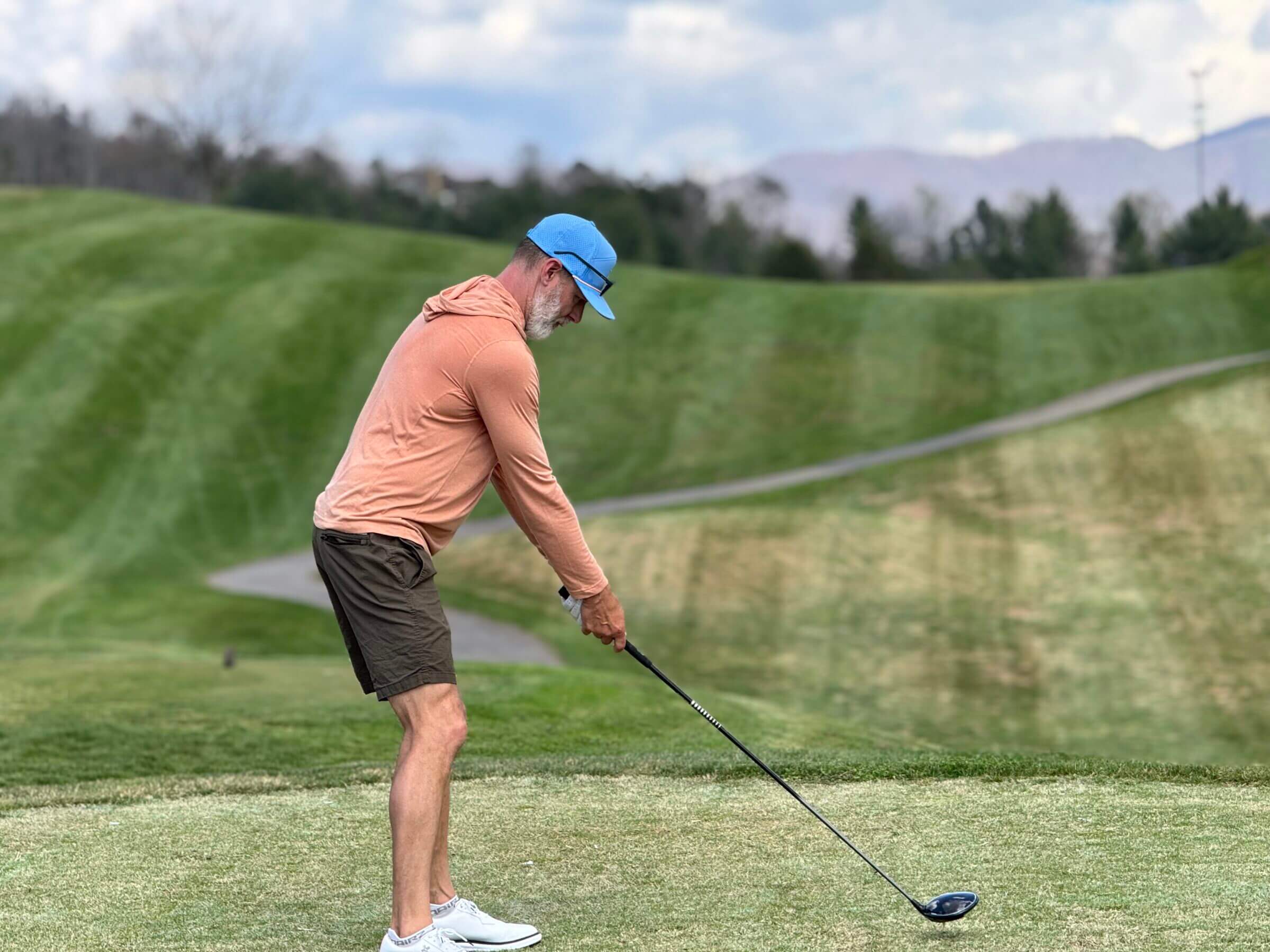
We show up to a range session with anywhere from one to 71 swing thoughts we want to work on in any given day. Start the turn with your core, keep your lead shoulder pointed away from the target, point the Velcro on your left hand down at the ground at the top of the backswing …I have a list of these gems that fill my head while I’m practicing but Hahn believes a golfer can’t take a bunch of swing thoughts onto the course when it’s time to play. Playing a solid round of golf isn’t about making perfect swings. It’s about putting the ball in the hole with as few strokes as possible.
So, he had me read a book called Extraordinary Golf that’s mostly focused on the mental and emotional aspect of the game of golf. There’s a lot of wisdom to take away from that book about how golfers approach the game in general but it has one chapter about concentration that specifically addresses the trouble with transitioning from the range to the course. The author of Extraordinary Golf, Fred Shoemaker, suggests golfers can’t transition to playing golf as well as they practice golf because we’re not practicing the way we actually play.
Shoemaker writes that problems arise on the course because while swing thoughts are fine when you’re drilling technique, they’re too ephemeral to deliver consistency when you’re playing a round. Let’s say your swing thought is to sink your weight into your back hip at the top of your backswing. That thought only lasts a fraction of a second at the beginning of your turn and leaves your mind with a lot of gaps to fill for the duration of your swing. So your mind wanders. It fills those gaps with doubts, fear and random thoughts: Is this Bermuda grass? Did the wind just pick up? Is that an owl? Why would an owl be out during the day? Is it rabid? Are there rabid owls?
I see this play out in my own game maybe half a dozen times during a round. I’ll hammer my swing thought and then, before I can start the downswing, I’ll move onto something really dumb like, “don’t hit it fat.”
And then I hit it fat.
This seems to happen more frequently as I get fatigued while playing 18 holes. My mind wanders more often and I make more frustrating mistakes because I have a harder time concentrating on the task at hand.
It shouldn’t be hard. A full swing takes about two seconds from takeaway to impact. Two seconds. That’s about a quarter of the time a cowboy is expected to ride a raging bull in a rodeo. That’s roughly the same amount of time it takes my teenagers to roll their eyes at me. And, yet, my monkey brain has a hard time staying focused for such a short period of time.
Considering the rising rates of ADHD and the general lack of attention span that plagues modern society, I’m guessing I’m not the only golfer out there with a monkey brain that wanders.
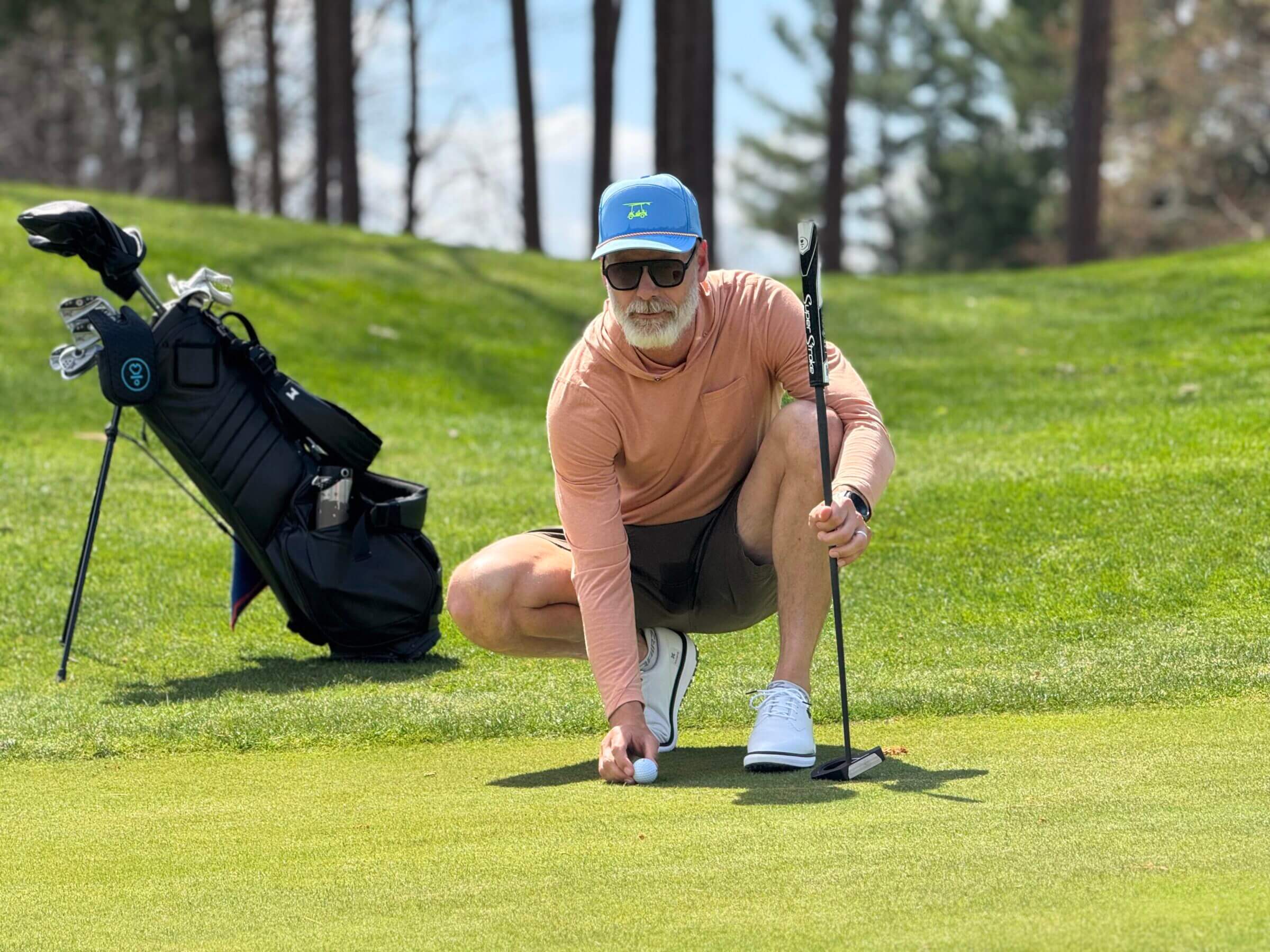
In his book, Shoemaker suggests we should start practicing the art of concentration at the range. Instead of filling our heads with a basket full of swing thoughts, commit to practicing your focus for one small bucket of balls. Pick a spot on the ball—a letter or a certain dimple—and try to train your focus on that spot throughout the entire swing. Don’t think about your turn, your wrist or the rising cost of gas. Just focus on the spot on the ball. Shoemaker offers some exercises to progress from focusing on the ball to a specific body part but I’m still working on that “T” on the ball.
It’s harder than it sounds. I’ve been trying it for a week of practice sessions and most of the time I lose concentration before I reach the top of my backswing. But I have noticed some progress in my short game during rounds thanks to this emphasis on concentration. I have the habit of following up a beautiful tee shot with a mishit wedge. I get in my head, tell myself not to chunk it, and then … well, you know what happens.
But these chip shots are shorter swings with fewer moving parts so it’s easier to stay focused for this brief period and I’ve been making more clean contact when I’m in scoring position. This is not a quick fix situation. It’s a work in progress but I’m looking forward to seeing what I can do when I can concentrate on something for a full two seconds at a time. The sky’s the limit, right?
Want to dig deeper into one golfer’s struggle to get better at golf in middle age? Read last week’s Scratch by 50 about gamifying the short game.