After nearly two decades on the professional golf circuit, Anirban Lahiri has seen the ups and downs of an athlete’s career from close quarters. However, despite numerous accolades to his name, the legendary Indian golfer remains a humble man who looks forward to cherishing each moment as it comes.
Ahead of the highly anticipated LIV Golf Singapore 2025, we caught Lahiri enjoying his time in the city-state. “I have been coming to Singapore for around 20 years now, right from my amateur days, and it’s always nice to come back here,” he said.
Followed by millions around the globe, the LIV Golf tour features some of the biggest names in the sport, including Lahiri, Bryson DeChambeau, Sergio Garcia, Jon Rahm, Tyrrell Hatton, Brooks Koepka and Phil Mickelson.
Golf fans are well-acquainted with Anirban Lahiri and his wins on the PGA Tour and the European Tour. After all, he has played in all four major tournaments of the sport (Masters Tournament, PGA Championship, US Open and The Open Championship). In addition, Anirban Lahiri has been among the top 50 players on the Official World Golf Ranking.
Some of Anirban Lahiri’s other achievements include:
- Winning the Malaysian Open and the Indian Open on the European Tour (both in 2015),
- Winning the Professional Golf Tour of India Order of Merit (in 2009),
- Winning the Asian Tour Players’ Player of the Year award (in 2014 and 2015),
- Winning the Asian Tour Order of Merit (in 2015),
- Winning the silver medal in the men’s team event at the Asian Games (in 2006).
With an action-packed weekend awaiting him at the Sentosa Golf Club in Singapore, we sit down with Anirban Lahiri as he opens up about his journey as a golfer, the highly-debated LIV Golf tour and why he feels it is likely to stay.
In conversation with LIV Golf icon Anirban Lahiri
Augustman: How has the reception been in Singapore so far?
It has been good. You normally don’t get to feel a lot of the reception from the crowd on Tuesdays and Wednesdays since there are restrictions in place. Hopefully, by Friday, we will see people turning up in large numbers. Plus, the weather is quite pleasant this time of the year — it isn’t as hot and humid as it can get in the summer. So that might encourage a large audience throughout the weekend.
Generally, Singapore has always been a great host city in the past — people here are excited to watch us play. I believe they would like to have us come back in the future as well.


AM: Being of Asian origin, you are not alien to the tropical climate. So, does the excess humidity in Singapore give you an advantage over your peers?
You see, most people on the LIV Golf tour, barring a handful, have the experience of playing in tropical conditions — they have been to places like Malaysia, Thailand and Hong Kong. So they all are aware of what needs to be done. The goal for everyone, including myself, is to manage our hydration and electrolyte levels to ensure we stay on top of our game. Not just for the tournament, this is an exercise we have been following throughout the week. While I would like to believe there is an advantage (having grown up in a tropical climate), at the end of the day, chances are high that it is all in my head.
AM: Asia, as a continent, is not famous for producing top-tier golfers. So what attracted you towards golf to the extent that you pursued it as a career?
Growing up, I played a variety of sports — football, cricket, golf, and even table tennis. However, I had access to the army golf courses, and I used to play a lot along with my father (Tushar Lahiri). The fact that not many people were interested in golf back then was exactly what drew me to it, for I figured that it might be easier to succeed in this sport.
I played my first national junior tournament in 1998 when I was 12 — the incentive then was the opportunity to skip school and play golf, even visit my grandparents (who lived in Kolkata, India, where the event took place). So it started as a fun affair, but by the time I reached my mid-teenage years, it was the hunger to wear the Indian team’s blazer, represent my nation on the grandest stage, and make my parents and myself proud that drove me to pick up golf as a career. I was at a point where I had to decide about my future. I was good at golf, and I saw a greater opportunity in it as compared to other sporting disciplines.
AM: What, in your opinion, was the big break that provided shape and direction to your career?
It’s hard to point out one event because my career has grown like a tree — there are several branches that offered several junctions at various points, and each of them is important to me. But if I had to pick one, it would be my first amateur tournament win at the Samarvir Sahi (Samarvir Sahi Amateur Golf Championship) in Chandigarh way back in 2005. I did not have a prosperous junior career, even though I represented India.
My level of golf skyrocketed once I turned amateur and moved to Bengaluru (a city in southern India) in 2004 to train with my coach (Vijay Divecha). The next three to four years of my life were extremely crucial in shaping me as the person I am today — I had to take charge of my life and learn to do everything on my own, be it cooking, cleaning the house, or washing my clothes. And that gave me a fresh perspective — compared to the ordeals of daily life, golf seemed less challenging. That made things easier for me.
AM: Two titles on the European Tour, breaking into the top 50 of the world rankings and finishing fifth in the PGA Championship — do you consider 2015 to be the finest year of your career so far?
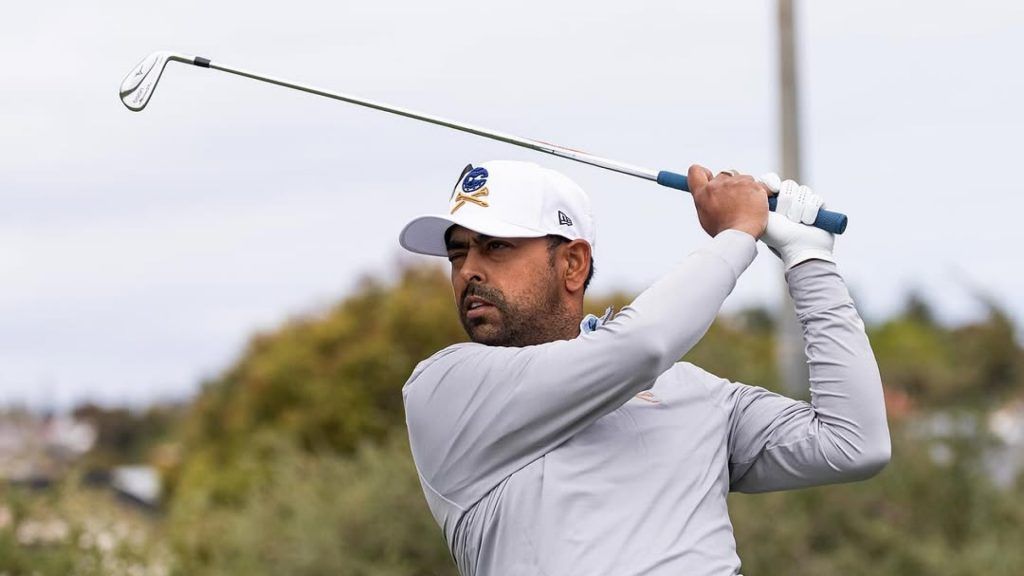
Yes, in terms of success, 2015 can be considered the golden year of my golfing career. Actually, it was the culmination of some great performances that started in 2012, and I will forever look back at that time fondly.
However, there are a lot of other things I take pride in that don’t look good on a CV. I have seen many ups and downs during my eight-year stint on the PGA Tour, and it is never talked about the way it should be because most people don’t realise how hard it is to continue playing on the tour for that long. I am also proud of the way I bounced back after sustaining an injury before the 2016 Olympics (in Rio de Janeiro).
AM: What prompted you to join the LIV Golf tour three years ago, particularly at a time when many in the fraternity were unwilling to accept it?
For me, it was my dissatisfaction in my personal space that prompted me to take this decision of joining the LIV Golf tour. While I was prospering professionally, my wife and I found it increasingly difficult to stay away from our home (in India), so we wanted to shift out of Florida, USA and move closer to our country — right now, we live in Dubai with our two children, which has made life easier to an extent.
However, I was clear in my head that I couldn’t compromise on playing against the best golfers in the world. So the moment I learned about a few of my friends signing on the LIV Golf tour from the PGA Tour, I realised that this shift would enable me to strike a balance between my professional and personal life. Therefore, it wasn’t a hard decision for me to make.
AM: We have also seen some criticism directed towards the LIV Golf tour. Does that bother you? And does this create a rift between the LIV Golf tour and the other tours?
If you look at it objectively, most of the criticism in question has come from the organisational level. As players, we have never been too impacted by the outside noise. I continue to enjoy strong ties with my peers on the PGA Tour — if anything, our friendship has grown over the years.
In terms of the consumption of the LIV Golf tour, we see many youngsters watching it nowadays. This has been the story of other sports as well — if you look at cricket, in 2007, many stalwarts opted out of the inaugural T20 World Cup. However, the Twenty-20 format enjoys a massive fanbase today.
I signed with the LIV Golf tour for personal reasons and because I thought this could be the direction in which the sport might be headed in future. I am not saying that will be the case, but yes, as of now, I see a lot of promise in the LIV Golf tour. Most importantly, I see ample room for all formats of golf to co-exist harmoniously.
AM: The LIV Golf tour’s non-traditional format has been opposed and, at times, looked down upon. As a player, how much does this heavily discussed format impact your approach towards the game?

Change is difficult, and there will always be some who are resistant to the idea of something new. So it boils down to people’s preferences, the kind of attitude they have towards the new format and if they are willing to accept it for what it is.
From a golfer’s perspective, there are some obvious adjustments that you have to make in terms of your preparation. Since they happen over only three days, not four, the LIV Golf events have limited room for error, and you cannot afford too many slip-ups. You have to adjust your meals and training as well. Plus, the team aspect of this tour is quite new and exciting — you get the opportunity to play alongside some of the best in the business, learn a lot from them, and above all, do your bit to help a collective cause.
AM: There have been talks about the PGA Tour and LIV Golf tour merger for a while now. Do you see it happening anytime soon?
Between you and me, the merger, as they call it, looks more like a truce — if it happens, and we don’t know when, it will be about charting a way where both the PGA Tour and the LIV Golf tour can co-exist and grow together. The chances of both turning into a single tour look unlikely because that ship has sailed. And, given that the LIV Golf tour has greatly benefitted the sport in the past two to three years, it is shaping into something beautiful that won’t go away easily — it is here to stay.
AM: The LIV Golf Singapore is almost considered a marquee golf event in Southeast Asia at present. In your opinion, how big a role does it play in promoting the sport here?
I think it’s a huge deal — Singapore is a wonderful city and the perfect place for an event like this, given its history with the Singapore Open (which was discontinued in 2022). The Sentosa Golf Club is a wonderful place to play the sport, and yes, our presence here is necessary because I believe it will, without any doubt, serve as a springboard for the growth of golf here.
AM: As a veteran in the Asian golfing circuit, which other parts of the continent, besides the Middle East, do you think are ready to host tournaments of such a large scale?
South Korea and Japan definitely have a massive golfing market and are more than equipped to host important golf tournaments like this. I hope that we can go to play in these two countries soon.
AM: Lastly, any message for our readers?
If you are in Singapore this weekend, come over and watch us play. Above all, support the sport and get involved with it as much as possible, even if from a recreational perspective. Golf has much to offer, and the opportunities in this sport will only increase with time.
(Hero and Featured Images Credit: Anirban Lahiri/Instagram)
The information in this article is accurate as of the date of publication.